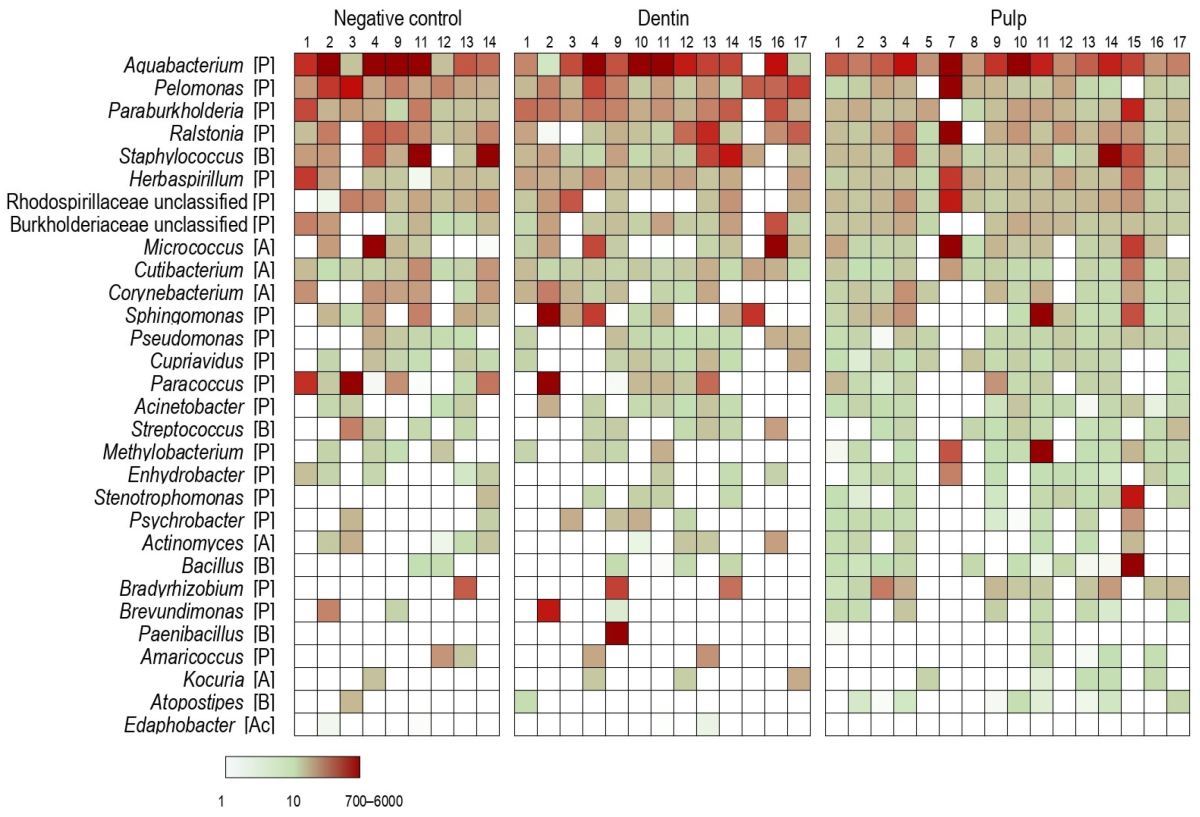
Dental pulp has traditionally been considered a sterile environment, but recent metataxonomic studies have detected bacterial DNA in healthy pulp tissues, raising questions about this assumption. This study used 16S rRNA sequencing to analyze pulp, dentin, and negative control samples from clinically healthy impacted third molars.
While bacterial DNA was detected in all samples, it was primarily attributed to reagent contaminants, with most extracted DNA being of human origin. Although some oral taxa appeared more abundant in pulp, contaminant species dominated, and no statistically significant differences remained after correcting for multiple comparisons.
The findings challenge the concept of a core microbiome in healthy pulp and highlight the critical need for rigorous controls, absolute abundance assessments, and complementary approaches (e.g., RNA-based analyses) to distinguish between viable bacteria and residual DNA. This study emphasizes the importance of careful interpretation in low-biomass microbiome research.
For more information, see the published paper.