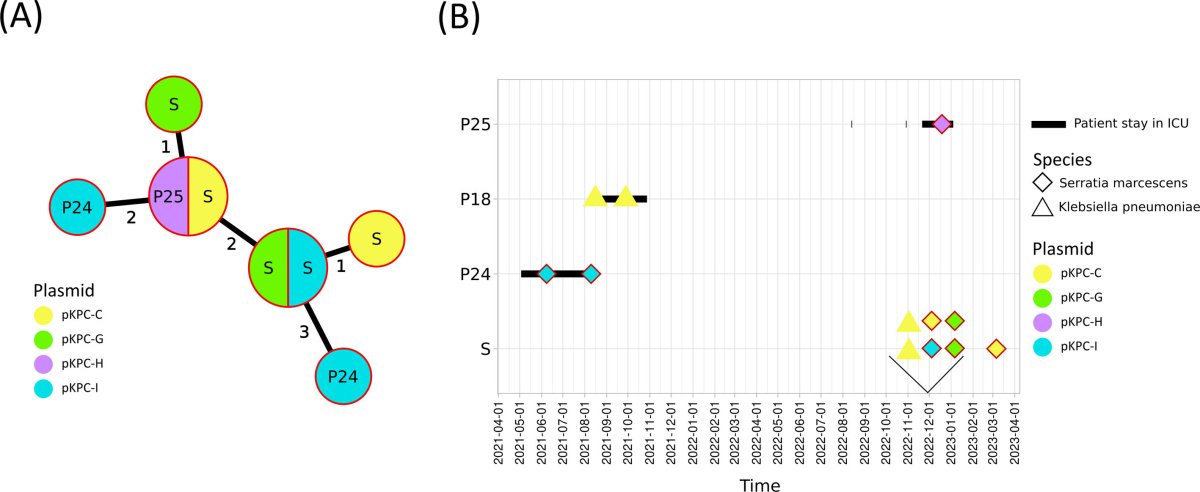
We studied the spread of carbapenem-resistant Enterobacteriaceae (CRE), a major public health threat, in a Swiss hospital. Klebsiella pneumoniae and Serratia marcescens, resistant to last-resort antibiotics, are particularly concerning. Hospitals, especially sink traps, act as reservoirs, enabling bacterial transmission. Over two years, we analyzed 57 isolates from patients and sink traps during two CRE outbreaks. Using DNA sequencing, we identified key resistance genes (blaKPC-2 and blaNDM-1) and characterized the plasmids carrying them.
Key Findings:
- Plasmids showed remarkable diversity, spreading both within and across bacterial species.
- Sink traps act as persistent reservoirs, facilitating plasmid exchange.
- Plasmids were sometimes more diverse than the bacteria themselves, indicating resistance spreads independently of bacterial clonal expansion.
This challenges traditional outbreak definitions, which focus only on bacterial clones. Effective infection control must address both bacterial strains and the plasmids driving resistance. The study calls for integrated surveillance and comprehensive prevention measures to curb CRE spread in healthcare settings.
For more information, see the published paper.